Alpine disciplines are defined by different course characteristics and event structures. General descriptions help readers orient themselves, but they do not replace the rules or programme published for a specific competition.
Downhill
Downhill is commonly understood as a speed discipline on a longer course. Course line, terrain variation and changing snow conditions influence the challenge. Gate placement defines the route through the course; the overall layout is not simply a sequence of tight turns. Race information should identify the discipline directly and provide the event’s own session and run details.
Preparation and competition stages can be organized differently from event to event. A calendar may list training sessions separately from the competition. The number and timing of those sessions must come from the event programme, not from a generic description. Timing records should clearly identify the counted competition run or runs.
Super-G
Super-G is also a speed discipline. As a general concept, it uses a course with a turning pattern distinct from slalom and giant slalom, while retaining a speed-oriented character. Terrain, visibility, surface and gate placement all shape how a course skis. A label alone does not tell a reader the exact route, course length or event programme.
Calendar and result interfaces should keep super-G entries separate from downhill even when sessions share a venue or date. Display the stated start and status for the relevant session, then retain the discipline label on result records. Do not assume that two speed events have identical setup or timing arrangements.
Giant slalom
Giant slalom is a technical discipline built around a turning course marked by gates. Its pattern differs from slalom, with a broader rhythm as a general characteristic. The exact course and gate layout are event-specific. Course setting, snow and terrain affect the line, so a short discipline description should not be mistaken for a complete technical specification.
Where an event uses more than one competition run, the calendar should name each run or make the event structure clear. Results should display run times separately and indicate how the published total is represented. The exact scoring and event requirements belong to the applicable rules and event information.
Slalom
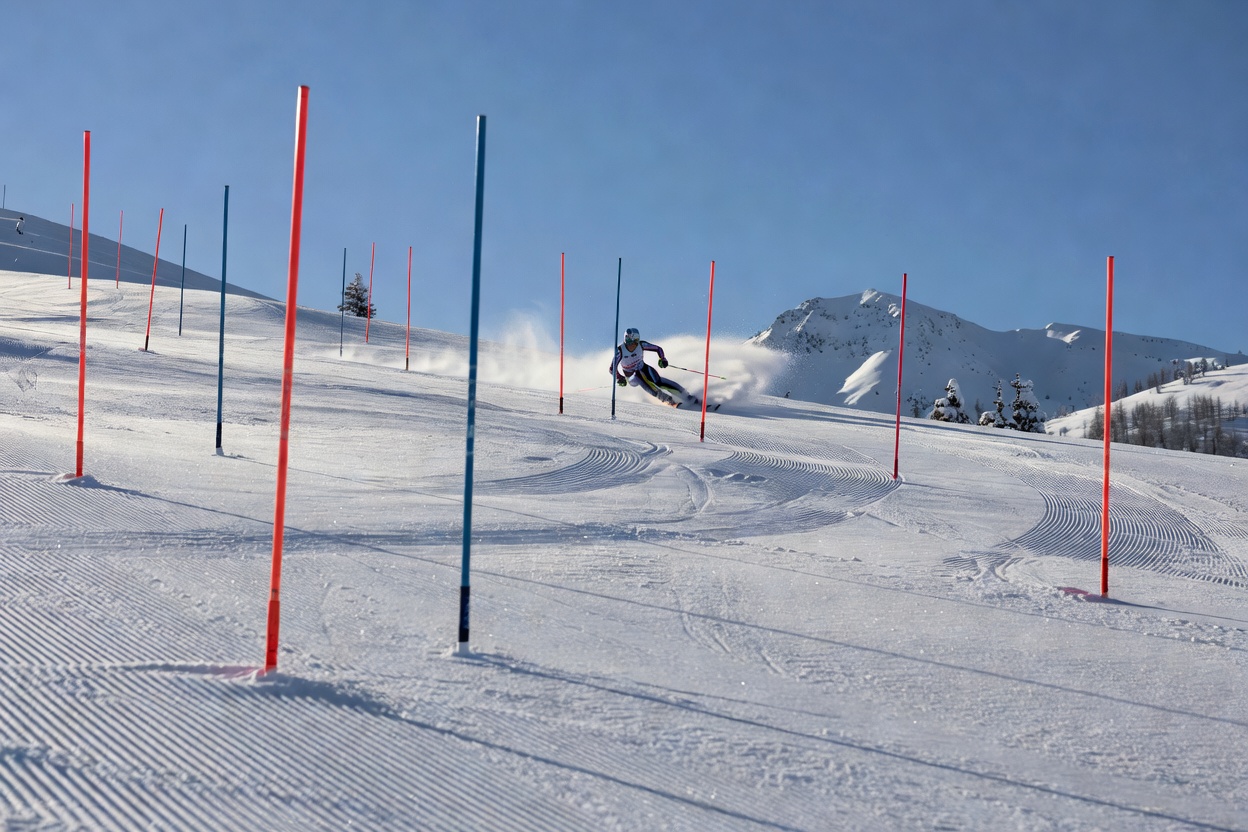
Slalom generally features a tighter, more frequent turning pattern than giant slalom. Closely spaced gates ask for rapid direction changes and precise line choices. The course is still shaped by its terrain and event setup. An introductory guide can explain the broad technical character without prescribing a specific gate count, spacing or regulation.
Event pages should distinguish separate runs when they are part of the programme. If a result combines runs, show each published run field and the final status. Do not treat an incomplete run record as a final classification. A clear format protects the difference between a course description and a result record.
Combined formats
Combined formats bring results or components from more than one discipline together under an event-specific structure. The word “combined” is not enough to determine which disciplines are included, how stages are ordered or how a final result is calculated. Those details must be taken from the published competition format.
A useful calendar identifies each component session, rather than listing a combined event as one unexplained start. A useful result record shows component results and the published overall outcome as distinct fields. If one component is postponed or changed, the schedule status should make that clear. Do not infer a replacement stage or calculation method.
Course characteristics and timing
Gate patterns give a visual route through a course. They do not, by themselves, explain all technical demands. Terrain, slope, snow surface, visibility and event setup affect the course. Timing may be recorded at the finish and, where provided, at intermediate points. The availability and label of split times depend on the event’s published timing record.
When comparing disciplines, keep the comparison high-level: broad speed or technical emphasis, general course rhythm and the structure stated for the event. Avoid presenting an informal comparison as a rule or universal performance claim. Use the published source when exact course details matter.
Race structure and organization
Race information is clearest when it separates discipline, event, session, run, venue, start and result status. Training and competition sessions should not be merged. A planned start is not proof that a session took place. Any change should appear as a status update associated with the correct listing.
For a calendar field template, see the race calendar guide. For run time, split and result labels, use the results guide. All descriptions here are general concepts. Specific regulations, course details, number of runs and event requirements vary and must be checked in the relevant official event material. No current competitions or results are listed on this page.
Precise labels keep a discipline guide useful: name the format, state what is general, and leave event-specific facts to their source.